
Flood to Full Circle
A story of resilience through reciprocity, and what can grow between us
In fall 2023, Lea Dyga was serving as an AmeriCorps member and manager of the Society for Ecological Restoration UW (SER-UW) Native Plant Nursery. As part of a student internship project, Lea brought a group to Oxbow’s Native Plant Nursery for an educational tour. During the visit, Oxbow team members Caitlin and Talinna shared a generous gift: around 20 wapato plants, offered so the SER-UW nursery could start its own wapato garden.
That small handoff grew into something more. It sprouted an ongoing relationship of shared learning and collaboration between the two nurseries. It was also during that visit that Lea learned about an open role at Oxbow, a connection that would eventually bring things full circle.
Lea joined the Oxbow team in March 2024 and now serves as Native Plant Nursery Manager. In fall 2025, Emma took over the SER-UW AmeriCorps position, and the partnership between the two nurseries continued to grow.
This past December, record-level flooding submerged the Snoqualmie Valley, including Oxbow’s 5,000-square-foot Native Plant Nursery. Production of over 42,500 plants was heavily impacted, with months—sometimes years—of work and care swept away in the floodwaters. It wasn’t just the loss of plants; ecological timelines and a vibrant web of community planting projects were also disrupted.
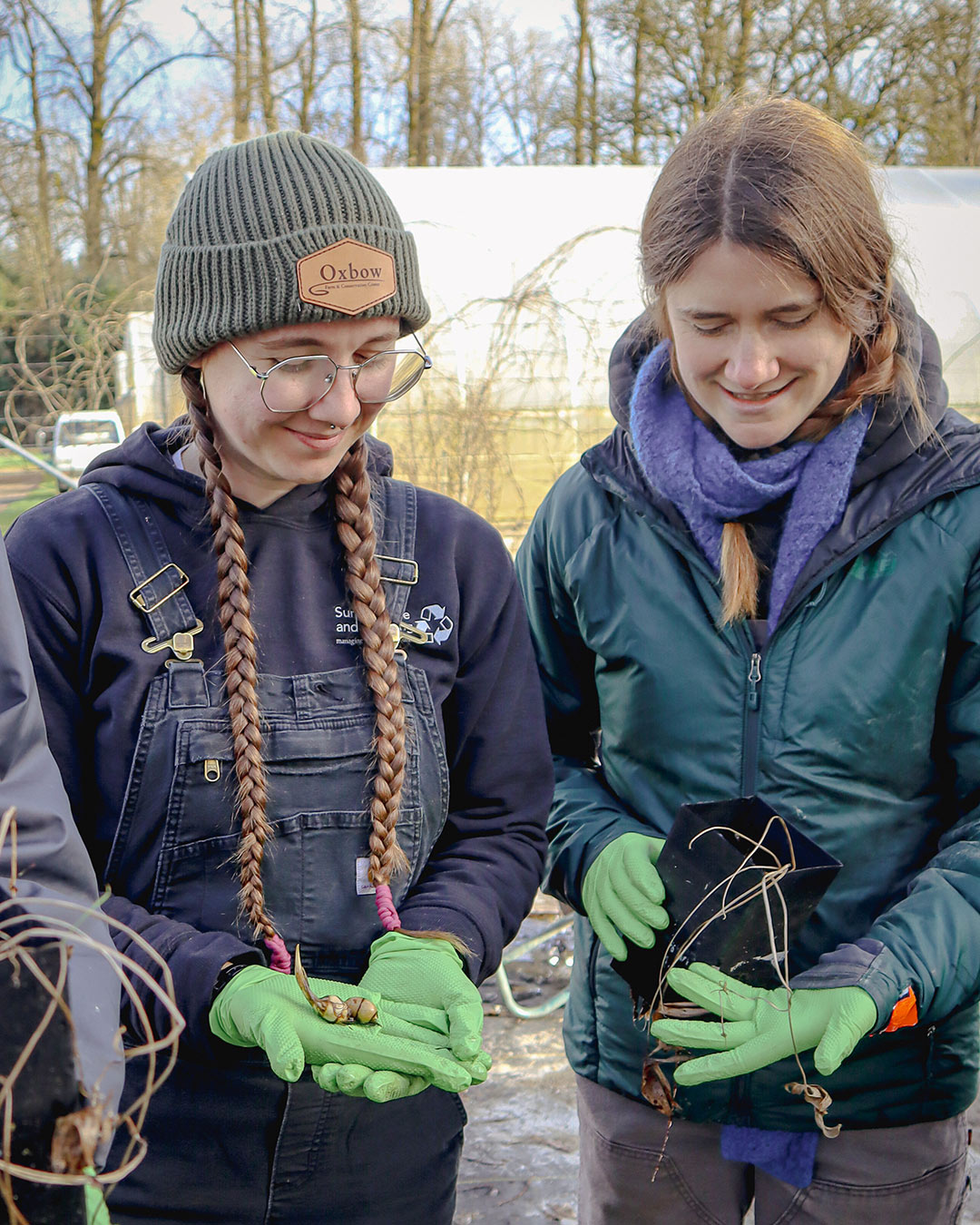
Then, this January, in a meaningful act of reciprocity, Emma brought a group of SER-UW interns to Oxbow to support flood recovery efforts. Along with their helping hands, they carried wapato plants—descendants of the very ones Oxbow had shared with them two years earlier. Now, those plants were returning home.
For Lea and the rest of Oxbow’s nursery staff, it was deeply special. A full-circle moment that did not just restore a plant, but affirmed the strength of partnerships, of care passed between hands, and of community resilience.
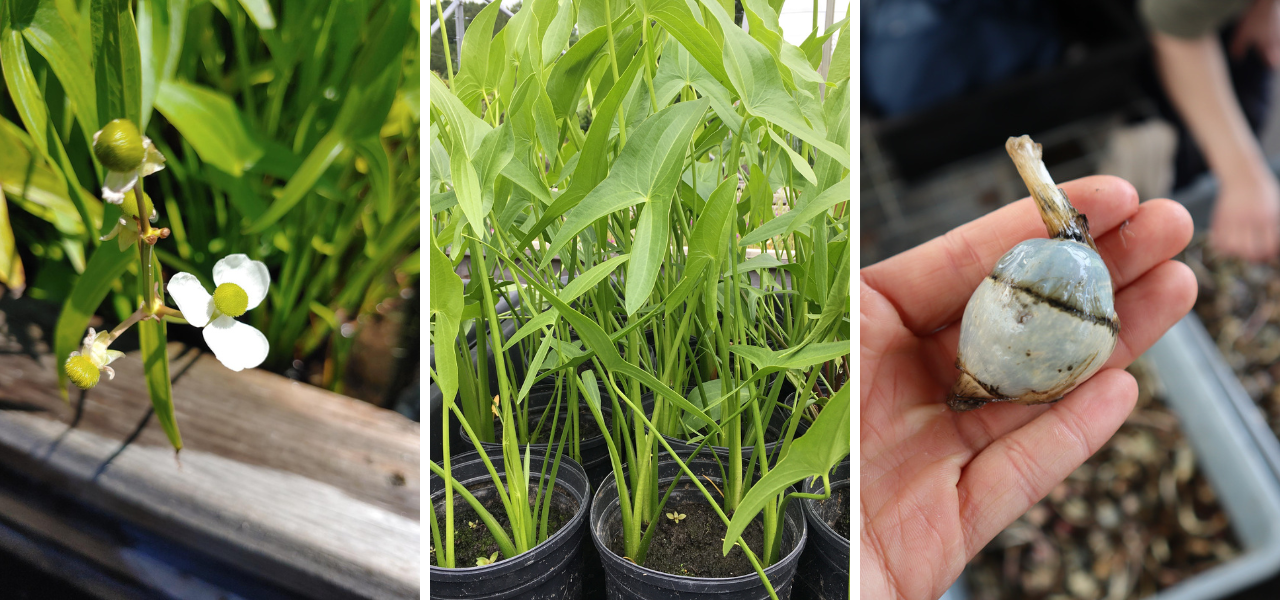
About Wapato (Sagittaria latifolia)
Cultural Significance (via the Snoqualmie Tribe):
The Snoqualmie Tribe shares that the spəqʷulc, also known as wapato, “Indian potato,” or “duck potato,” is more than just a potato—it serves as a meaningful connection to their ancestors who once harvested it for food. Learn more about wapato from the Snoqualmie Tribe.
Habitat:
Found in shallow waters—lake edges, ponds, streams, or wet mud
Height:
Grows up to 3 feet tall