
Personality Quiz
Which PNW Native Plant Are You?
Discover your inner wild archetype
You could be the bold, early-blooming wildflower or the steady old-growth tree holding the forest together. Take the quiz and find out.
Perfect for nature nerds, curious wanderers, and anyone looking for another way to procrastinate online. Your results (probably) won’t predict your future or improve your credit score, but they might explain why you’re drawn to deep, mossy ravines with ancient energy.
Get Started
Answer 7 silly questions for your 100% unscientific and delightfully accurate results:
Meet the Archetypes
Got your results? Go ahead and download your archetype image, post it, text it, make it your phone background. Not there yet? No worries. Here’s a peek at the full lineup of plant personalities waiting in the quiz.
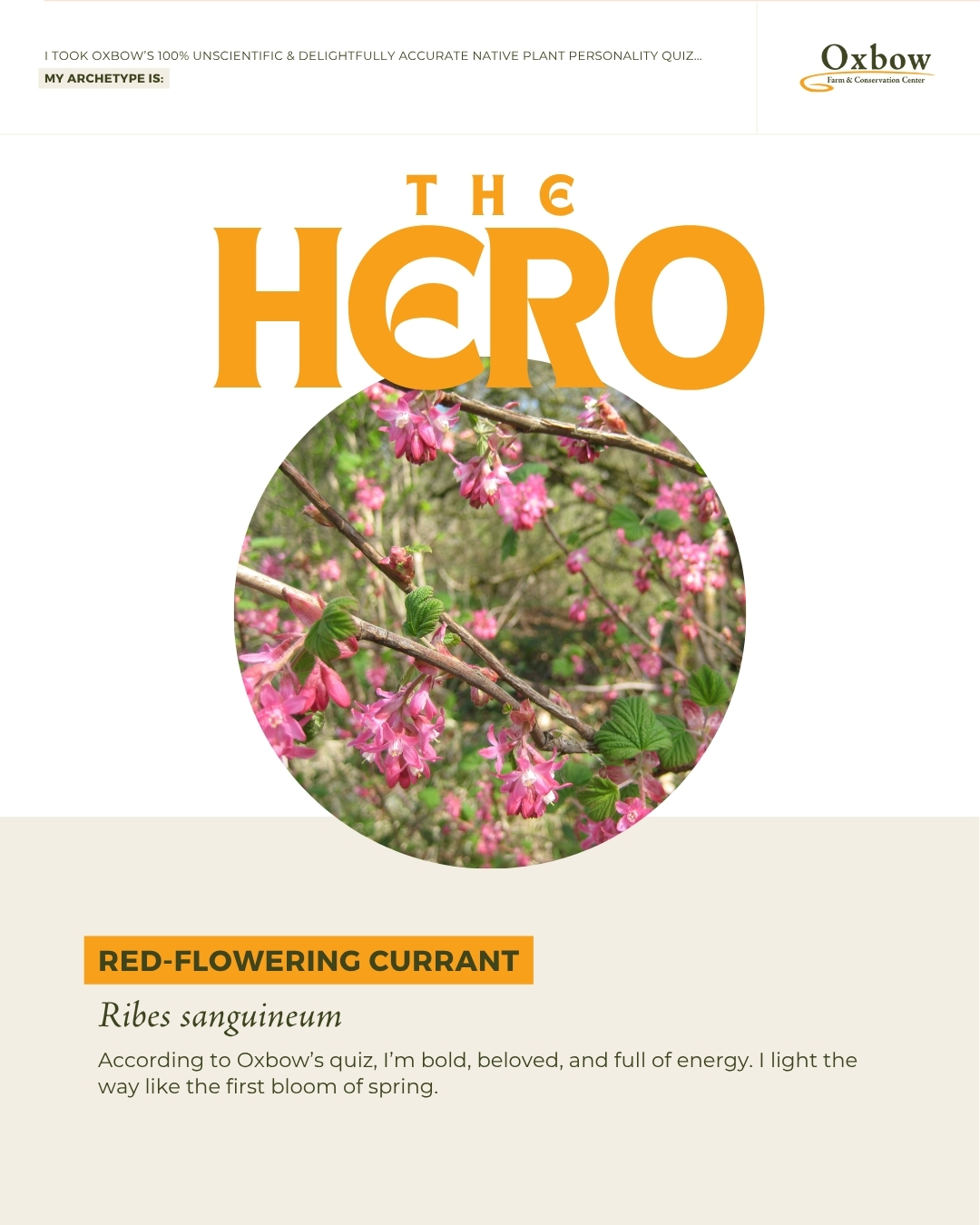
Red-Flowering Currant
(Ribes sanguineum)
You lead with boldness and heart. Like the first wildflower to bloom in spring, you light the way for others. You draw people in with your charisma and lift up the community around you. Birds, bees, humans, everyone loves having you around!
Habitat:
This deciduous, thornless shrub thrives in full to partial sun and tolerates dry, nutrient-poor soils. It is well-suited for landscapes where it can serve as an early spring showstopper, attracting pollinators and providing essential habitat for birds.
Height:
Up to 8-10′
Additional Notes:
In early spring, clusters of bright pink-red flowers bloom, offering nectar for hummingbirds, bees, and other pollinators. By summer, edible black fruit ripen, attracting birds and other wildlife. The flowers can also be brewed into a simple syrup, making a delicious addition to sodas and cocktails.
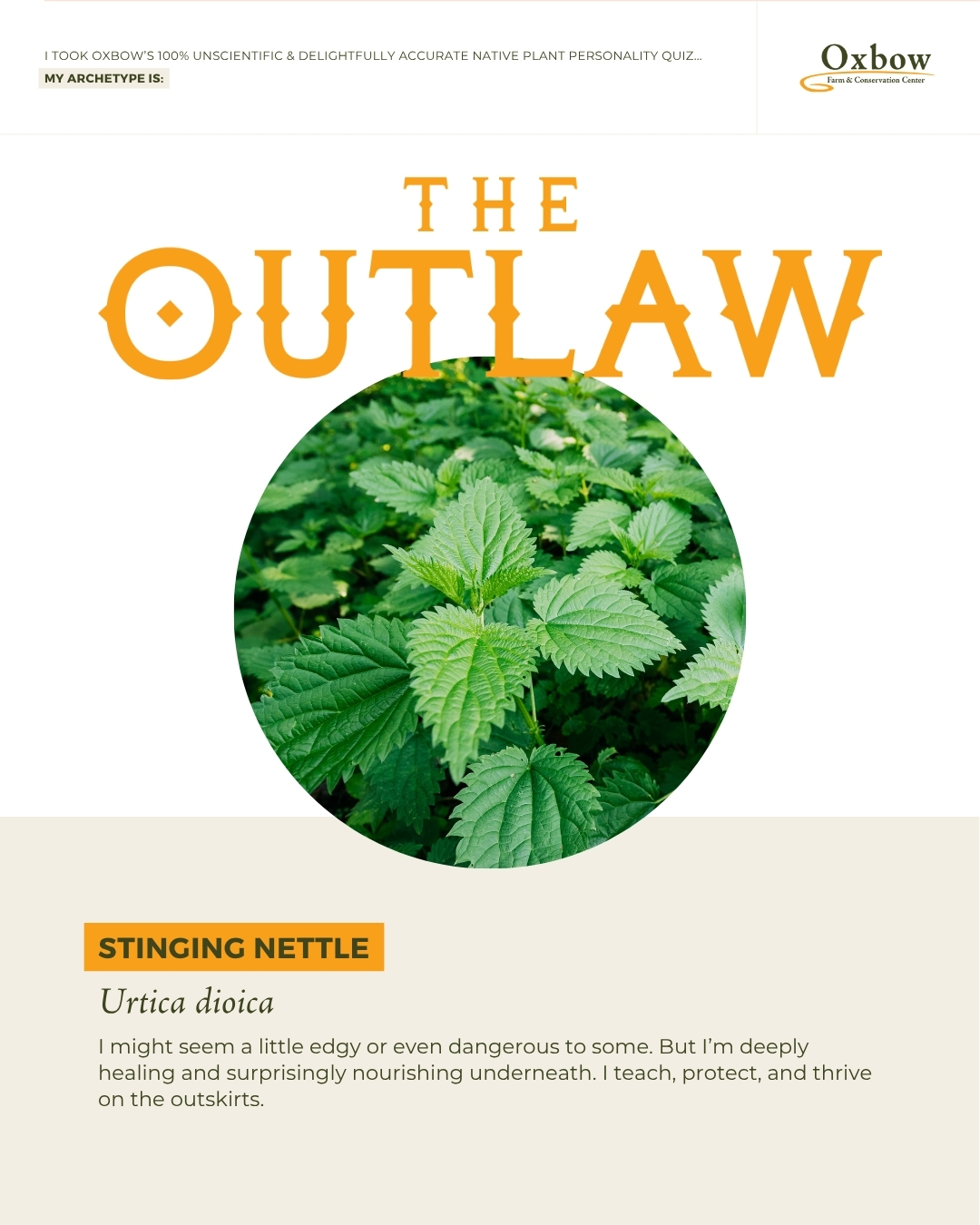
Stinging Nettle
Urtica dioica
Misunderstood? Maybe. But once people know you, they realize how medicinal you are (that sting is thought to help with arthritis!). You’re not here to please, you’re here to heal, to challenge, to teach people to pay attention. Like nettle, you’re rich in nutrients and knowledge, and anyone brave enough to get close is better for it.
Habitat:
Stinging nettle grows along edges of clearings and old fields, in damp roadside thickets, and on moist forest floors, often forming large patches. It’s also easy to grow in containers.
Height:
3–6′
Edibility:
Gathered by Native Indigenous peoples since time immemorial, stinging nettle has been used medicinally, ceremonially, and as a nutrient-rich food source. Roots, seeds, stems, and young leaves are all edible. Young shoots are best harvested just as they emerge from the ground, with cooking removing their sting. Nettles are high in fiber, calcium, manganese, lutein, and zeaxanthin, making them a nutritious addition to soups, teas, pestos, and other dishes where spinach or kale might be used. Leaves can also be preserved by freezing or drying.
Additional Notes:
Nettles provide valuable habitat and food for wildlife, including butterfly species that lay eggs on the underside of their leaves. In many Indigenous cultures, the sting is viewed as a gracious reminder to stay aware and pay attention to the present moment.
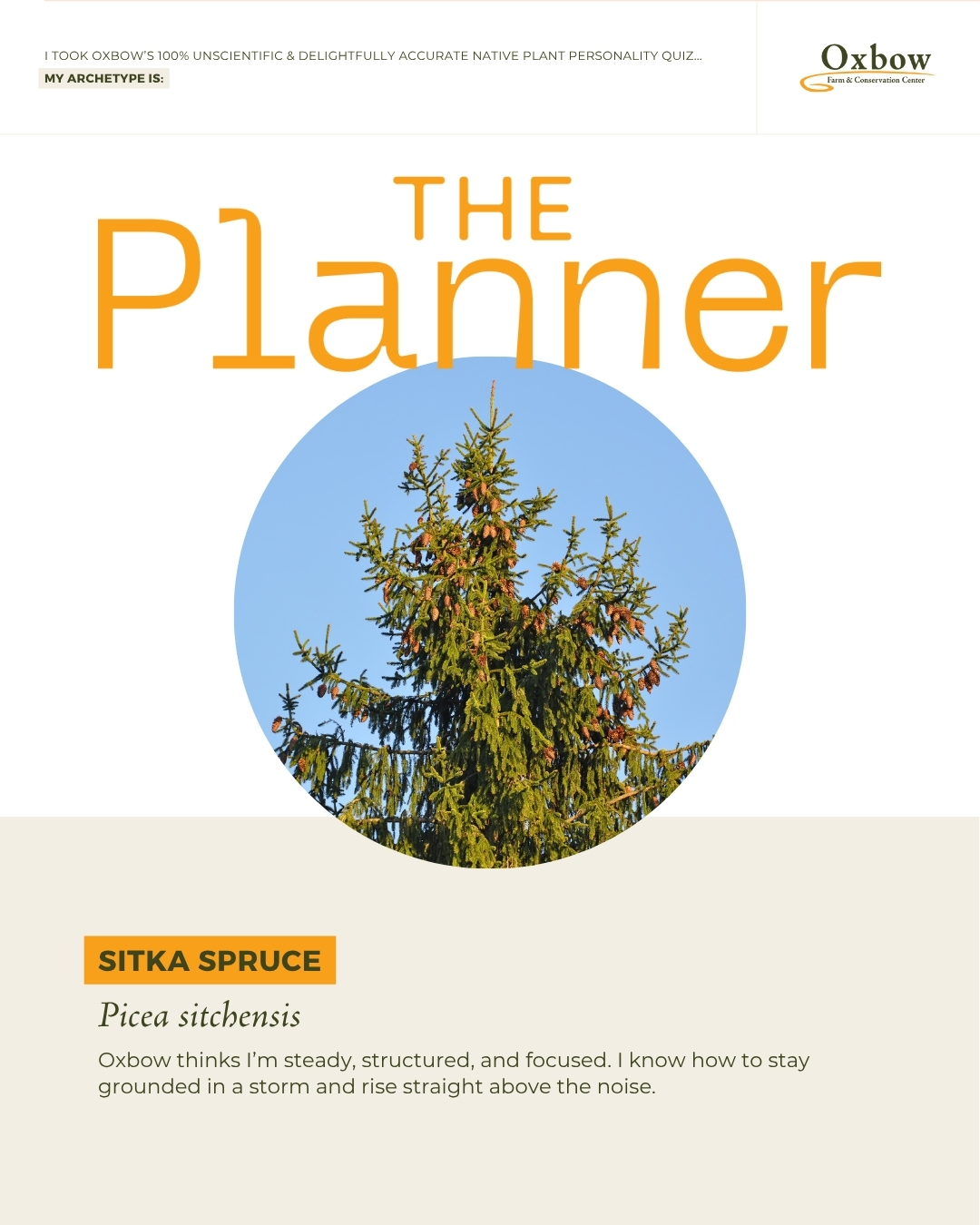
Sitka Spruce
Picea sitchensis
Strong, sharp, and structured, you’re the backbone of the forest (and probably your friend group). With upright growth and assertive needles, you don’t rely on others to grow (thanks to wind pollination). You know how to stay grounded in a storm and rise above the noise. You have standards (and spreadsheets), and that’s a good thing.
Habitat:
The largest species of spruce in the world, Sitka spruce is a majestic evergreen native to coastal areas of the Pacific Northwest. It grows best in full to partial sun with moist soil, making it a staple species for conservation and restoration plantings. Mature trees reveal brownish-grey, scale-like bark beneath their dense evergreen needles.
Height:
Typically 100–200′
Additional Notes:
Sitka spruce provides year-round structure and habitat in the landscape. Its cones offer an important winter seed source for small mammals and birds, supporting wildlife through the colder months. Known for its light, strong, and resonant wood, Sitka spruce has been prized for making musical instruments such as pianos, harps, and violins.
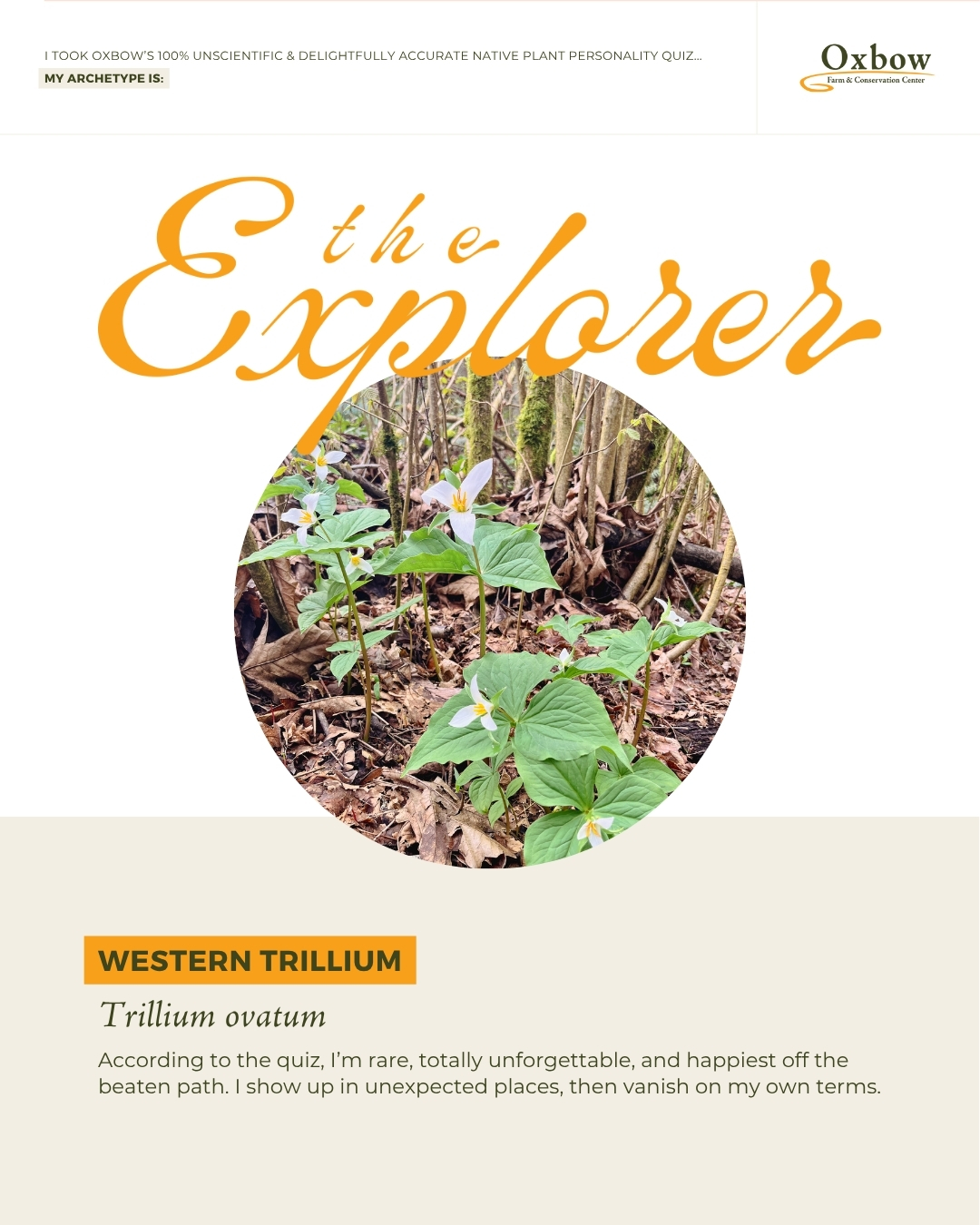
Western Trillium
Trillium ovatum
Rare, reflective, and quietly radiant, you thrive off the beaten path. Like the trillium blooming briefly in the dim understory, you appear just long enough to leave a lasting impression, then vanish into the shadows on your own terms. You value depth over noise, subtle shifts over loud arrivals, and freedom to follow your own timeline.
Habitat:
Western trillium thrives in full shade and moist, well-drained soil rich in organic matter, making it a perfect choice for the understory of moist PNW forests.
Height:
up to 1′
Additional Notes:
This springtime beauty features a whorl of leaves and a single large white flower that fades to pink and then purple as it blooms from March to June. Trilliums take at least 5 years to grow from seed to bloom, and the “bulb” is actually a super slow-growing rhizome. The seeds of trillium are dispersed by ants, attracted by a fatty, nutrient-rich attachment called an elaiosome, which they carry back to their colonies, effectively dispersing and burying the seeds. This plant not only adds elegance to shaded areas but also supports various pollinators and plays a unique role in the ecosystem through its ant-assisted seed dispersal.
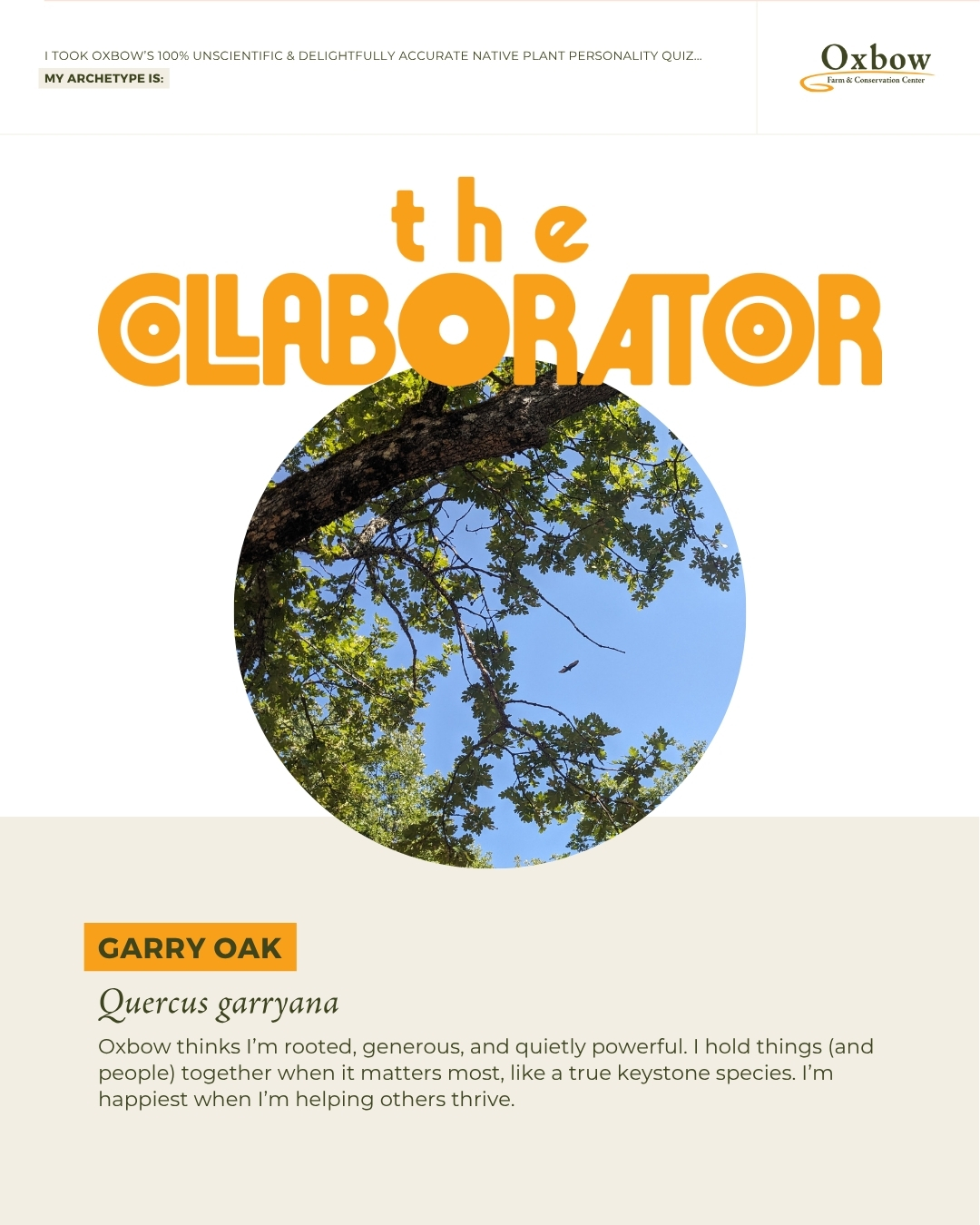
Garry Oak
Quercus garryana
Rooted, generous, and deeply connected. You’re the kind of person who makes everything — and everyone — a little better just by being there. You’re loyal, dependable, and quietly powerful. Like a true keystone species, you hold the ecosystem (or group text) together.
Habitat:
This drought-tolerant, deciduous tree is native to regions west of the Cascades, making it Washington’s only native oak species. Garry oaks thrive in full sun to part shade and prefer dry to moist soils. They are commonly found in open prairies and savannahs, which are habitats currently in decline.
Height:
Up to 80′
Additional Notes:
Garry oaks are slow-growing trees with a broad, spreading, rounded crown and intricate branching patterns. They produce nutritious acorns that serve as a vital winter food source for various species of birds and mammals. Additionally, Quercus species, including Garry oaks, are crucial hosts for approximately 900 species of caterpillars, supporting a diverse array of pollinators and providing a food source for birds. With oak trees facing threats in other parts of North America, particularly from invasive species like the Spongy moth (Lymantria dispar dispar), planting Garry oaks can help preserve this important caterpillar host species and contribute to the conservation of local biodiversity.
Further Reading:
Planting for the Planet
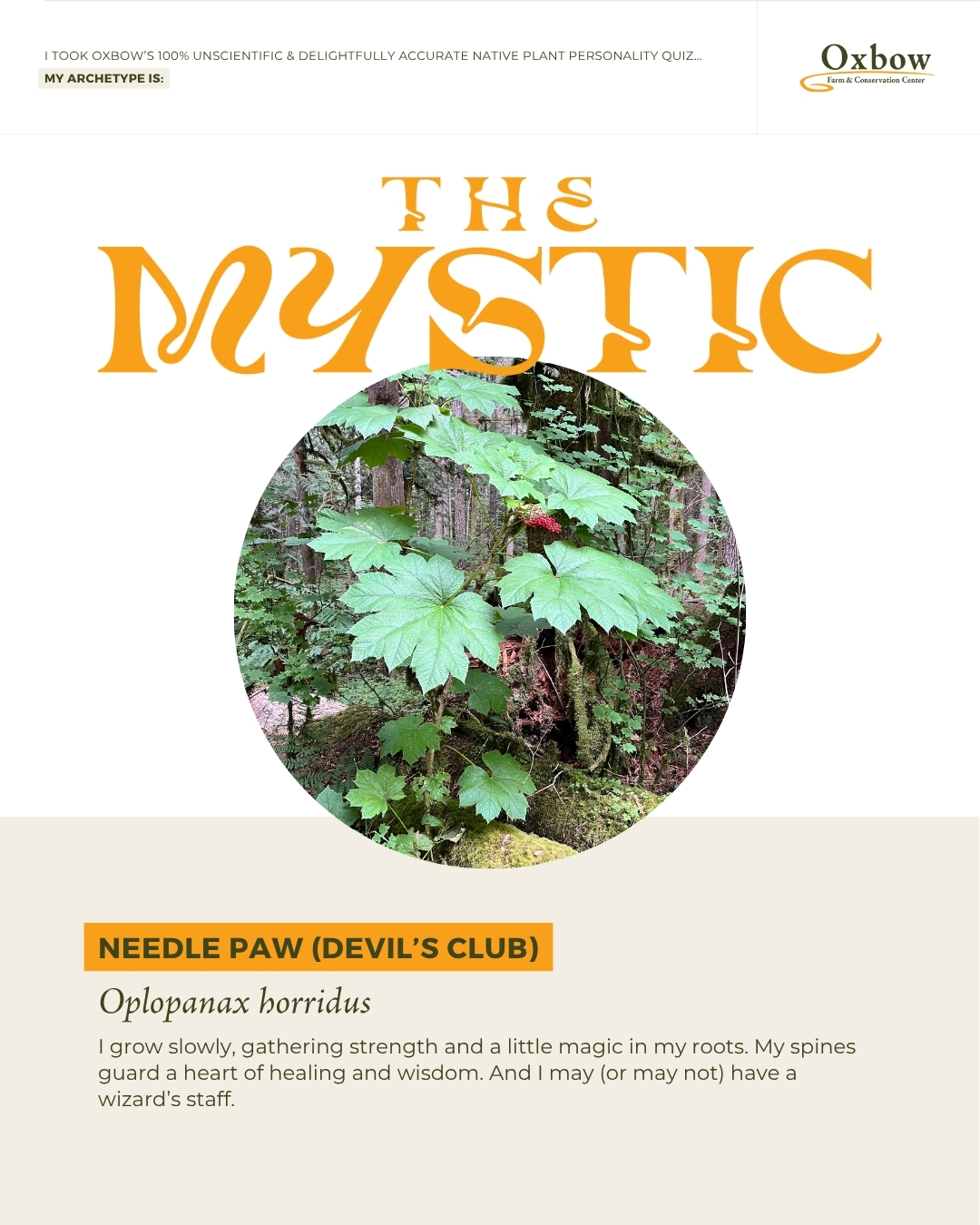
Needle Paw AKA Devil’s Club
Oplopanax horridus
Slow-growing and quietly powerful, you carry deep-rooted wisdom. Just one glimpse of you feels like crossing paths with an old forest guardian—spiny, steady, and full of purpose. Revered as “all-heal,” you’ve been used traditionally for both physical and spiritual medicine. You may be guarded, but your presence offers protection, clarity, and a reminder that true strength doesn’t rush.
Habitat:
Needle paw thrives in full or partial shade with wet or very moist soil, making it ideal for planting near salmon-bearing streams where its broad leaves provide essential shade. This dramatic, spiky deciduous shrub blooms fragrant green-white flowers between May and July, followed by bright red fruit clusters in August-September. Its early blooms attract pollinators, while its large leaves offer cover for birds. Plant away from well-worn paths.
Height:
Up to 10 feet tall
Additional Notes:
Though needle paw berries are favored by bears, they are not edible for humans. However, its spicy roots and piney leaves make a pungent tea, and the plant has a rich history of medicinal and cultural importance. Used by over 38 indigenous linguistic groups, different parts of needle paw are applied to treat dozens of physical ailments and for various spiritual purposes.
Further Reading:
American Botanical Council
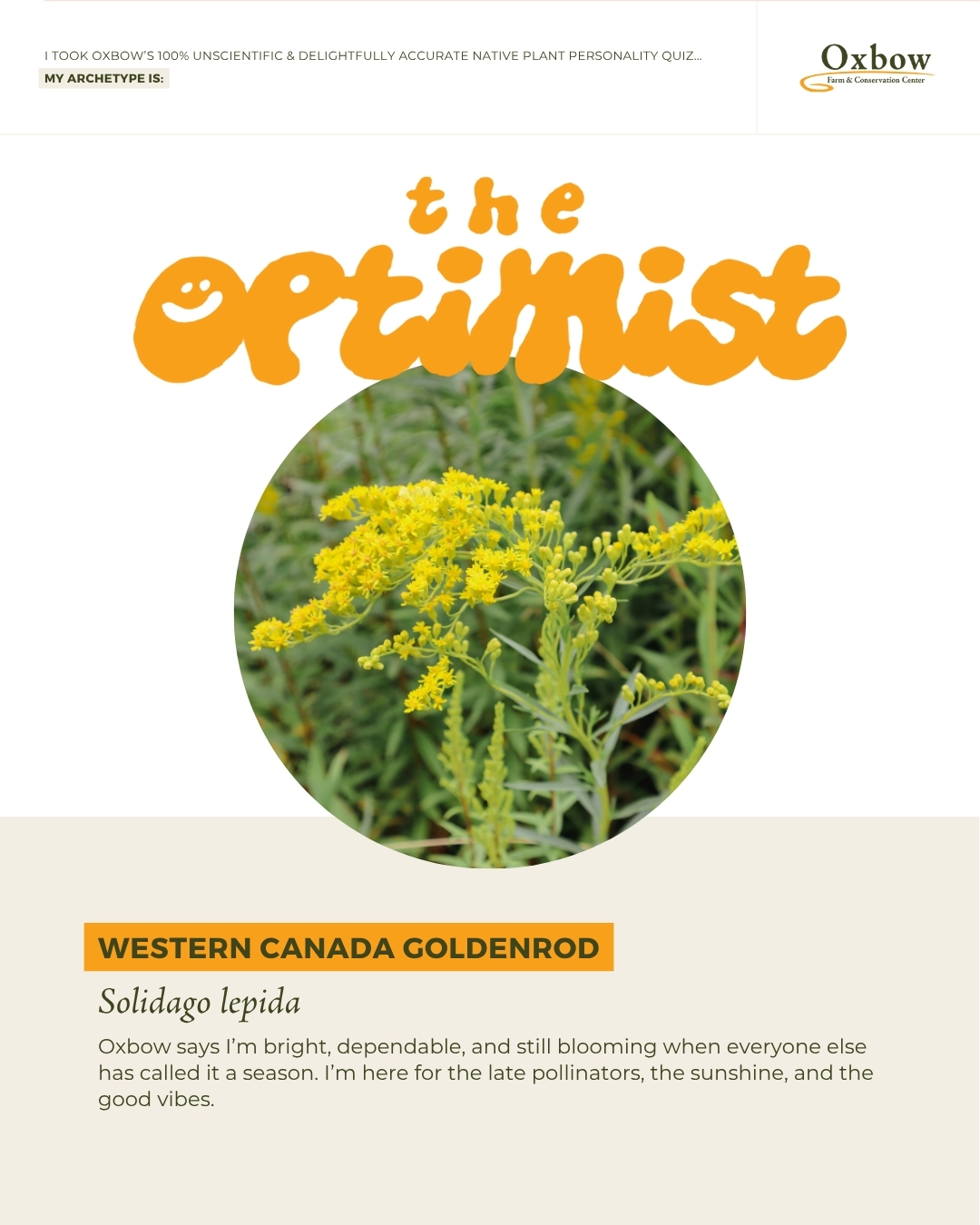
Western Canada Goldenrod
Solidago lepida
Bright, buoyant, and full of life, you keep blooming when others are fading. With tall, showy yellow flowers, you bring warmth and color well into the cold, making you a late-season beacon for pollinators and people alike. You bounce back from wilt like it’s no big deal, and your optimism is more than a mood, it’s essential. Goldenrod supports over 100 species of butterflies and moths, and dozens of bees rely on it alone. You shine not just for yourself, but for the whole ecosystem.
Habitat:
Western Canada goldenrod thrives in dry to moist areas, typically found in meadows and riparian zones. It is shade intolerant and grows best in full sun to part shade. This plant is well-suited for environments where it can spread by rhizomes, establishing itself as a strong presence in the landscape.
Height:
Up to 3-5′
Additional Notes:
Western Canada goldenrod is a vital late-season bloomer, flowering from July to October, and plays a crucial role in supporting pollinators when other resources are scarce. Its yellow flowers attract a wide range of pollinators, including bumblebees and butterflies like the pine white, red admiral, and Mylitta crescent. This plant is also significant for North American pollinator biodiversity, hosting over 100 different moth and butterfly larvae, making it one of the most important genera for sustaining pollinator populations.
Further Reading:
National Wildlife Federation, “Keystone Native Plants”
Show Off Your Results & See What Your Friends Get
Loved the quiz? Share your results, tag us on social, and follow along for more native plant joy!
How to share:
- Option 1 [Download]: Tap, click, save the graphics from your archetype section above—easy as that! Now go ahead and text, email, or share on social.
- Option 2 [Instagram Stories]: Click this post link and scroll through to find your archetype, then share directly from there.
- Option 3 [Link]: Copy the quiz link and share it with friends so they can discover their plant twin too.
Learn More About Native Plants
Native plants are full of personality and essential to thriving ecosystems. Want to dig deeper?